
Unlock Long-Term Returns Through Mixed-Use Investment
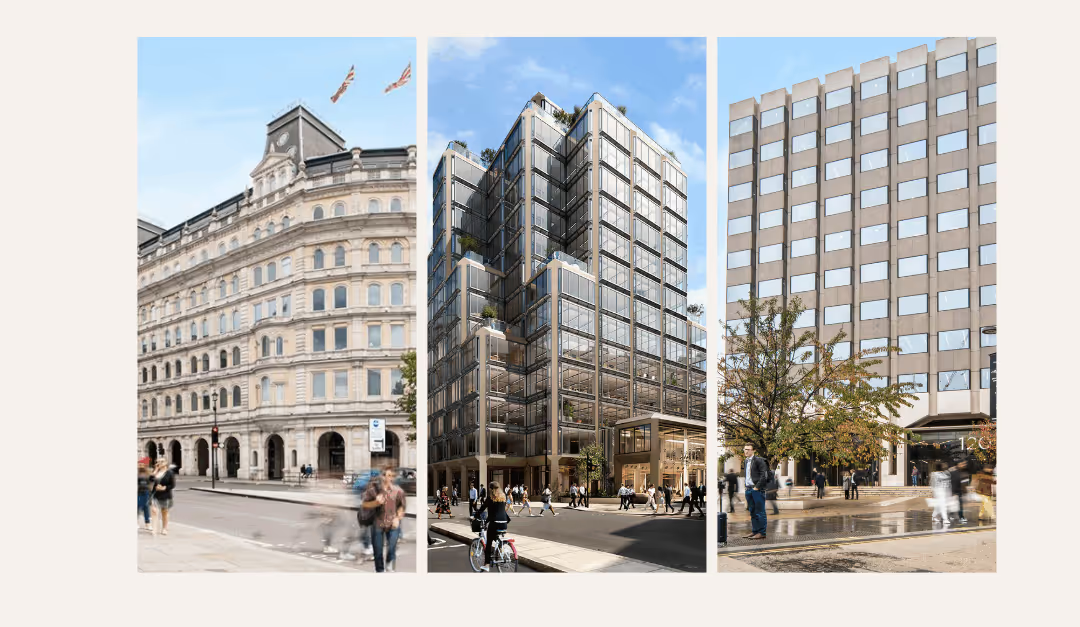
As real estate advisors, we’re increasingly being asked about where potential long-term opportunities lie, and one theme keeps coming up. What’s driving the rise of mixed-use developments in the UK property market?
By integrating residential, office, retail, and leisure components within a single scheme, mixed-use developments are delivering diversified income streams and contributing to long-term value. They are increasingly recognised as an effective way to assist future-proof capital growth, attracting sustained demand and helping to smooth out market fluctuations. A balanced approach like this supports performance, even when individual sectors face downturns, while robust property management ensures operational efficiency, maintains high standards, and underpins long-term asset value.
Location and Lifestyle Demand
In cities like London, Manchester, and Birmingham, demand for “live-work-play” environments continues to rise. Tenants are drawn to the convenience and vibrancy of mixed-use spaces, while investors benefit from high occupancy levels and rising rental values; a key driver of long-term capital growth.
Occupiers favour mixed-use schemes as they encourage in-person working and foster collaboration. Local authorities also prefer mixed-use developments, recognising their role in creating balanced, sustainable urban environments.
Recent research from the University of the Built Environment found that office spaces within mixed-use developments can command rental premiums of 22–33% compared with equivalent stand-alone office buildings, highlighting the financial advantage of integrated schemes.
Creating Value Through Community Engagement
Mixed-use schemes naturally foster vibrant, connected communities by combining living, working, and leisure spaces. This sense of place drives stronger tenant retention, lower vacancy, and a more resilient local economy. Developments with public spaces, green areas, and community amenities not only enhance wellbeing but also support long-term asset value. Effective property management ensures that these spaces are well-maintained and optimised for tenant satisfaction, reinforcing both community engagement and investment performance.
Future-proofing Through Flexibility
One of the clear advantages of mixed-use assets is their adaptability. As occupier behaviour evolves; from flexible working to the rise of experiential retail, these developments can be more readily reconfigured. This flexibility safeguards long-term value, and proactive property management ensures that operational changes are implemented smoothly, protecting income streams.
Sustainable and Strategic
With ESG now central to most investment strategies, mixed-use schemes offer a tangible opportunity to integrate sustainability across a single asset. From efficient design to reduced commuting and stronger community engagement, these developments align with both environmental and social priorities, all of which contribute to long-term capital growth. Strong management practices also ensure sustainability initiatives are maintained and measured, further enhancing asset performance.
Mixed-Use Investment Guidance
As investor priorities continue to evolve, mixed-use assets are becoming central to future-proofed investment strategies. They offer diversity, adaptability, and a strong connection to how people truly live and work today.
If you’d like to explore mixed-use investment opportunities or discuss how expert property management can enhance your portfolio’s long-term value, our real estate advisory team is here to help










.svg)


.png)